A distributed model for healthcare provider data
Turning compliance into continuous value through micro-attestations
A distributed model for healthcare provider data
Turning compliance into continuous value through micro-attestations
A distributed model for healthcare provider data
Turning compliance into continuous value through micro-attestations


The Council for Affordable Quality Healthcare (CAQH) is an alliance representing thousands of health insurance plans, providers, and related organizations. Their mission is to streamline healthcare administration and improve data accuracy so patients can more easily access care.
In this 7-month Master of Human-Computer Interaction Capstone at Carnegie Mellon University, CAQH asked us to help modernize their business model and unlock new use cases for provider data, moving them toward becoming a true data-as-a-service platform.
Problem
How might we unlock new use cases for CAQH’s provider data by improving users’ ability to extract, validate, and apply data?
Solution
Micro-attestations embed data verification into providers’ everyday workflows, creating a continuous loop of accurate, up-to-date information.
Role
Service Design
Product Strategy
UX/UI
Client
Council for Affordable Quality Healthcare (CAQH)
Team
Angela Xuan
Caroline Fan
Seun Sule
Will Page
Timeline
January - August 2025
The Council for Affordable Quality Healthcare (CAQH) is an alliance representing thousands of health insurance plans, providers, and related organizations. Their mission is to streamline healthcare administration and improve data accuracy so patients can more easily access care.
In this 7-month Master of Human-Computer Interaction Capstone at Carnegie Mellon University, CAQH asked us to help modernize their business model and unlock new use cases for provider data, moving them toward becoming a true data-as-a-service platform.
Problem
How might we unlock new use cases for CAQH’s provider data by improving users’ ability to extract, validate, and apply data?
Solution
Micro-attestations embed data verification into providers’ everyday workflows, creating a continuous loop of accurate, up-to-date information.
Role
Service Design
Product Strategy
UX/UI
Client
Council for Affordable Quality Healthcare (CAQH)
Team
Angela Xuan
Caroline Fan
Seun Sule
Will Page
Timeline
January - August 2025
The Council for Affordable Quality Healthcare (CAQH) is an alliance representing thousands of health insurance plans, providers, and related organizations. Their mission is to streamline healthcare administration and improve data accuracy so patients can more easily access care.
In this 7-month Master of Human-Computer Interaction Capstone at Carnegie Mellon University, CAQH asked us to help modernize their business model and unlock new use cases for provider data, moving them toward becoming a true data-as-a-service platform.
Problem
How might we unlock new use cases for CAQH’s provider data by improving users’ ability to extract, validate, and apply data?
Solution
Micro-attestations embed data verification into providers’ everyday workflows, creating a continuous loop of accurate, up-to-date information.
Role
Service Design
Product Strategy
UX/UI
Client
Council for Affordable Quality Healthcare (CAQH)
Team
Angela Xuan
Caroline Fan
Seun Sule
Will Page
Timeline
January - August 2025
Discovery & Research
CAQH manages the nation’s largest repository of provider data—information essential for verifying clinicians and connecting patients to care. Yet, the providers who supply it face an arduous, repetitive attestation process every 90 days, often leading to outdated or incomplete data.
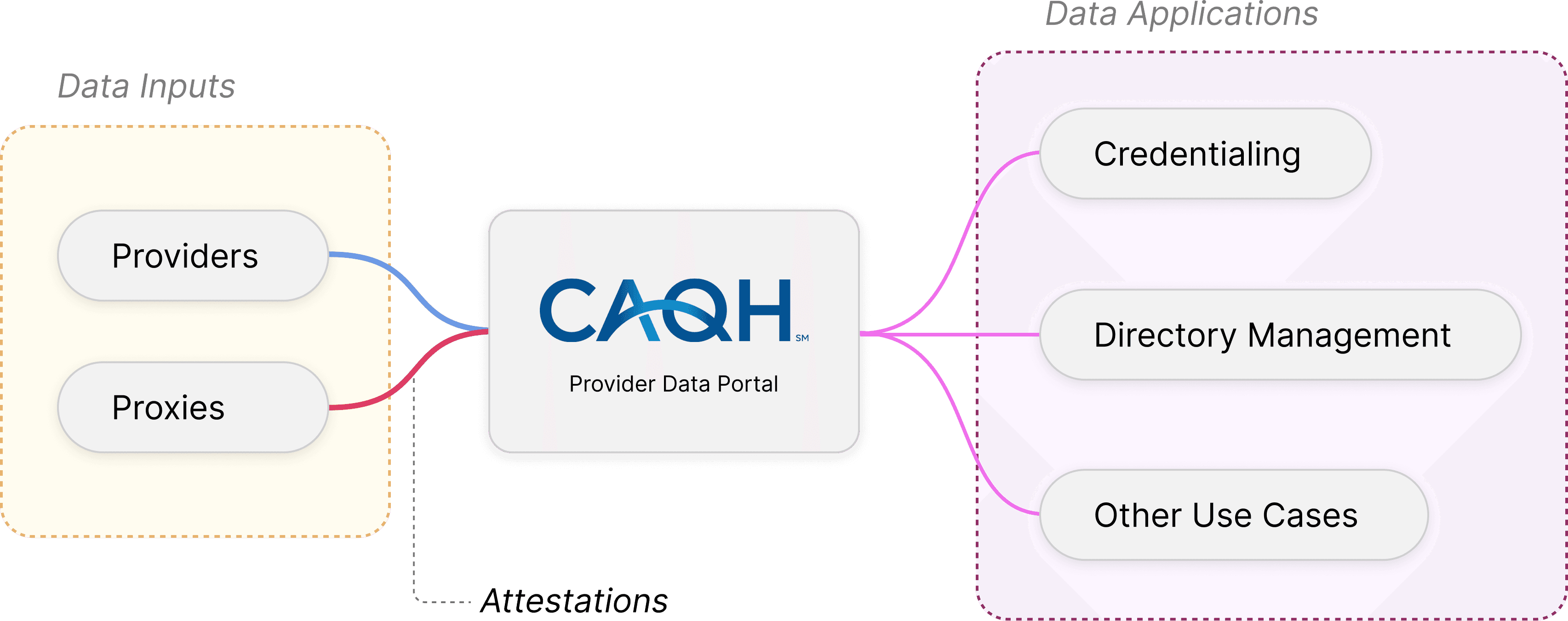
We began by mapping the end-to-end provider data ecosystem to understand how information is created, validated, and ultimately used by health plans and providers.

CAQH manages the nation’s largest repository of provider data—information essential for verifying clinicians and connecting patients to care. Yet, the providers who supply it face an arduous, repetitive attestation process every 90 days, often leading to outdated or incomplete data.
We began by mapping the end-to-end provider data ecosystem to understand how information is created, validated, and ultimately used by health plans and providers.
CAQH manages the nation’s largest repository of provider data—information essential for verifying clinicians and connecting patients to care. Yet, the providers who supply it face an arduous, repetitive attestation process every 90 days, often leading to outdated or incomplete data.
We began by mapping the end-to-end provider data ecosystem to understand how information is created, validated, and ultimately used by health plans and providers.


Stakeholder Interviews
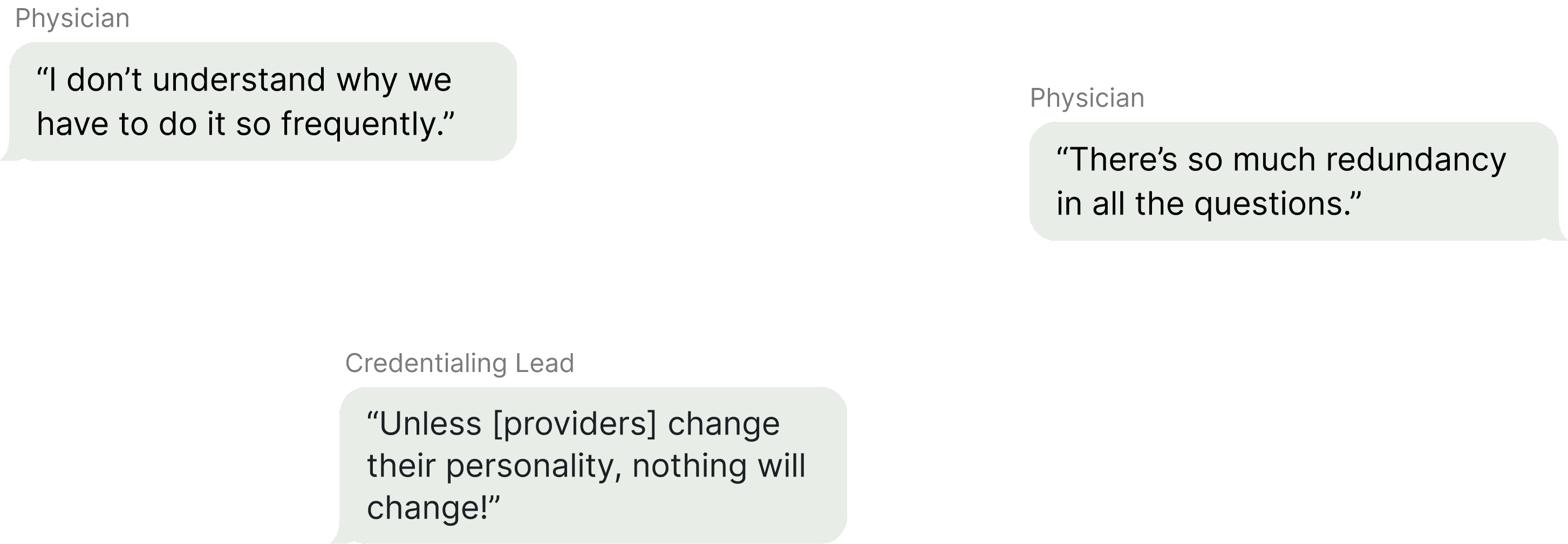
We interviewed 20+ stakeholders across providers, credentialing teams, and payers to map the ecosystem, uncover shared pain points, and identify leverage points for impact.

Stakeholder Interviews
We interviewed 20+ stakeholders across providers, credentialing teams, and payers to map the ecosystem, uncover shared pain points, and identify leverage points for impact.

Stakeholder Interviews
We interviewed 20+ stakeholders across providers, credentialing teams, and payers to map the ecosystem, uncover shared pain points, and identify leverage points for impact.

Prioritization
We assessed potential solution spaces by impact, feasibility, and alignment with CAQH’s roadmap.

Prioritization
We assessed potential solution spaces by impact, feasibility, and alignment with CAQH’s roadmap.

Prioritization
We assessed potential solution spaces by impact, feasibility, and alignment with CAQH’s roadmap.

Assumption Artifacts
We built 24 low-fidelity prototypes to quickly test core assumptions and mental models with real users, enabling rapid iteration before investing in higher fidelity design.

Assumption Artifacts
We built 24 low-fidelity prototypes to quickly test core assumptions and mental models with real users, enabling rapid iteration before investing in higher fidelity design.

Assumption Artifacts
We built 24 low-fidelity prototypes to quickly test core assumptions and mental models with real users, enabling rapid iteration before investing in higher fidelity design.
Insight
Data application failures stem from data quality issues upstream.
While our client initially encouraged us to focus on new data use cases (given ongoing efforts around data quality), our research revealed the two are inseparable. The ability to use data meaningfully depends on its accuracy and freshness. By improving how data is verified and maintained at the source, we could unlock far greater downstream value and efficiency.
Insight
Data application failures stem from data quality issues upstream.
While our client initially encouraged us to focus on new data use cases (given ongoing efforts around data quality), our research revealed the two are inseparable. The ability to use data meaningfully depends on its accuracy and freshness. By improving how data is verified and maintained at the source, we could unlock far greater downstream value and efficiency.
Insight
Data application failures stem from data quality issues upstream.
While our client initially encouraged us to focus on new data use cases (given ongoing efforts around data quality), our research revealed the two are inseparable. The ability to use data meaningfully depends on its accuracy and freshness. By improving how data is verified and maintained at the source, we could unlock far greater downstream value and efficiency.


Insight
Attestations are seen as a universal burden.
The 90-day attestation cycle requires providers to revalidate large volumes of static data, creating unnecessary administrative burden and disengagement that directly undermine data accuracy.
Insight
Attestations are seen as a universal burden.
The 90-day attestation cycle requires providers to revalidate large volumes of static data, creating unnecessary administrative burden and disengagement that directly undermine data accuracy.
Insight
Attestations are seen as a universal burden.
The 90-day attestation cycle requires providers to revalidate large volumes of static data, creating unnecessary administrative burden and disengagement that directly undermine data accuracy.


Reframing the Opportunity
Our early research revealed that the core barriers to data use stemmed from how provider information is maintained. To address this, our team defined three new focus areas—and I led the exploration into attestations, the 90-day process providers must complete to keep their data current.
We saw an opportunity to reimagine this compliance-heavy task as a value-generating interaction for both providers and CAQH—transforming it from an obligation into an ongoing exchange of trusted, high-quality data.
Our early research revealed that the core barriers to data use stemmed from how provider information is maintained. To address this, our team defined three new focus areas—and I led the exploration into attestations, the 90-day process providers must complete to keep their data current.
We saw an opportunity to reimagine this compliance-heavy task as a value-generating interaction for both providers and CAQH—transforming it from an obligation into an ongoing exchange of trusted, high-quality data.
Our early research revealed that the core barriers to data use stemmed from how provider information is maintained. To address this, our team defined three new focus areas—and I led the exploration into attestations, the 90-day process providers must complete to keep their data current.
We saw an opportunity to reimagine this compliance-heavy task as a value-generating interaction for both providers and CAQH—transforming it from an obligation into an ongoing exchange of trusted, high-quality data.
New Problem Statement
How might we turn provider attestations from a compliance task into a moment of mutual value?
New Problem Statement
How might we turn provider attestations from a compliance task into a moment of mutual value?
New Problem Statement
How might we turn provider attestations from a compliance task into a moment of mutual value?
Solution: Micro-Attestations
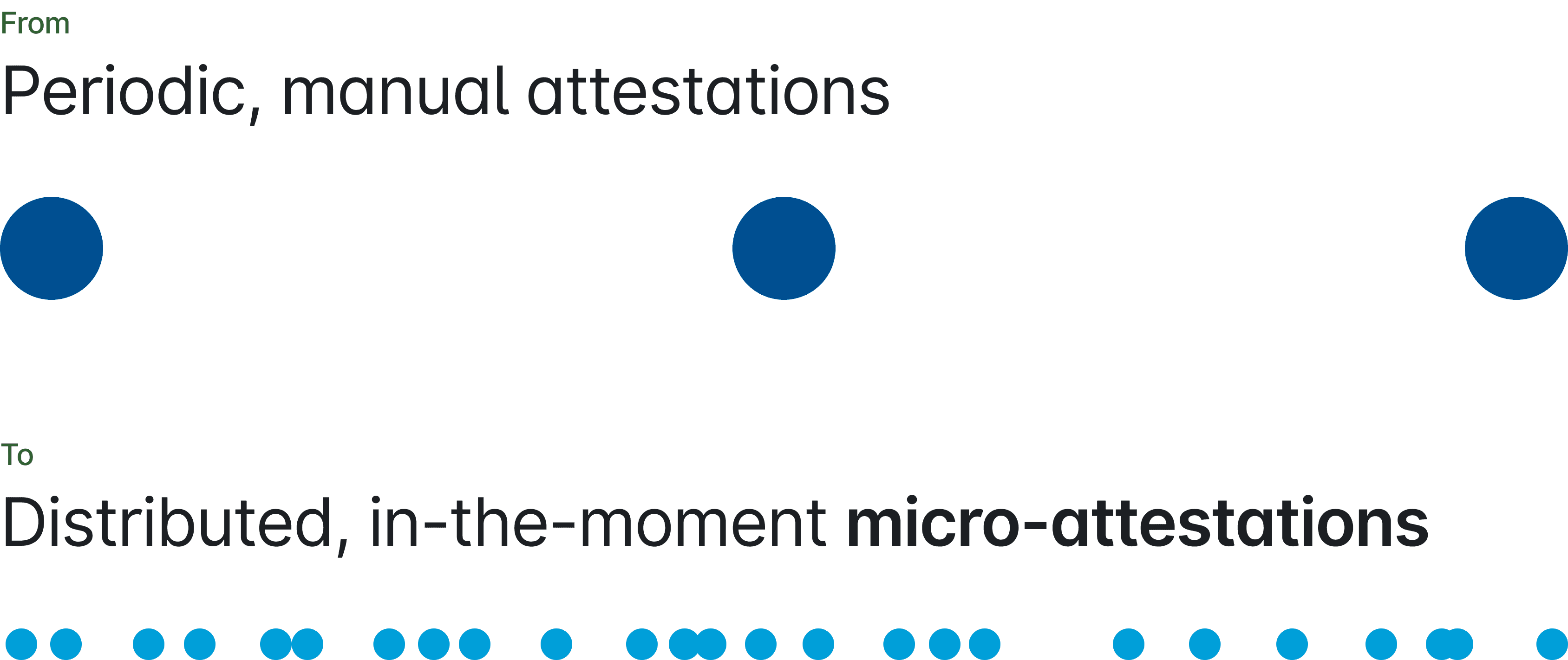
Instead of quarterly attestations, micro-attestations distribute verification into small, contextual moments. Providers and proxies verify or update data in real time as part of routine tasks—such as renewing licenses, updating EHRs, or completing insurance forms.


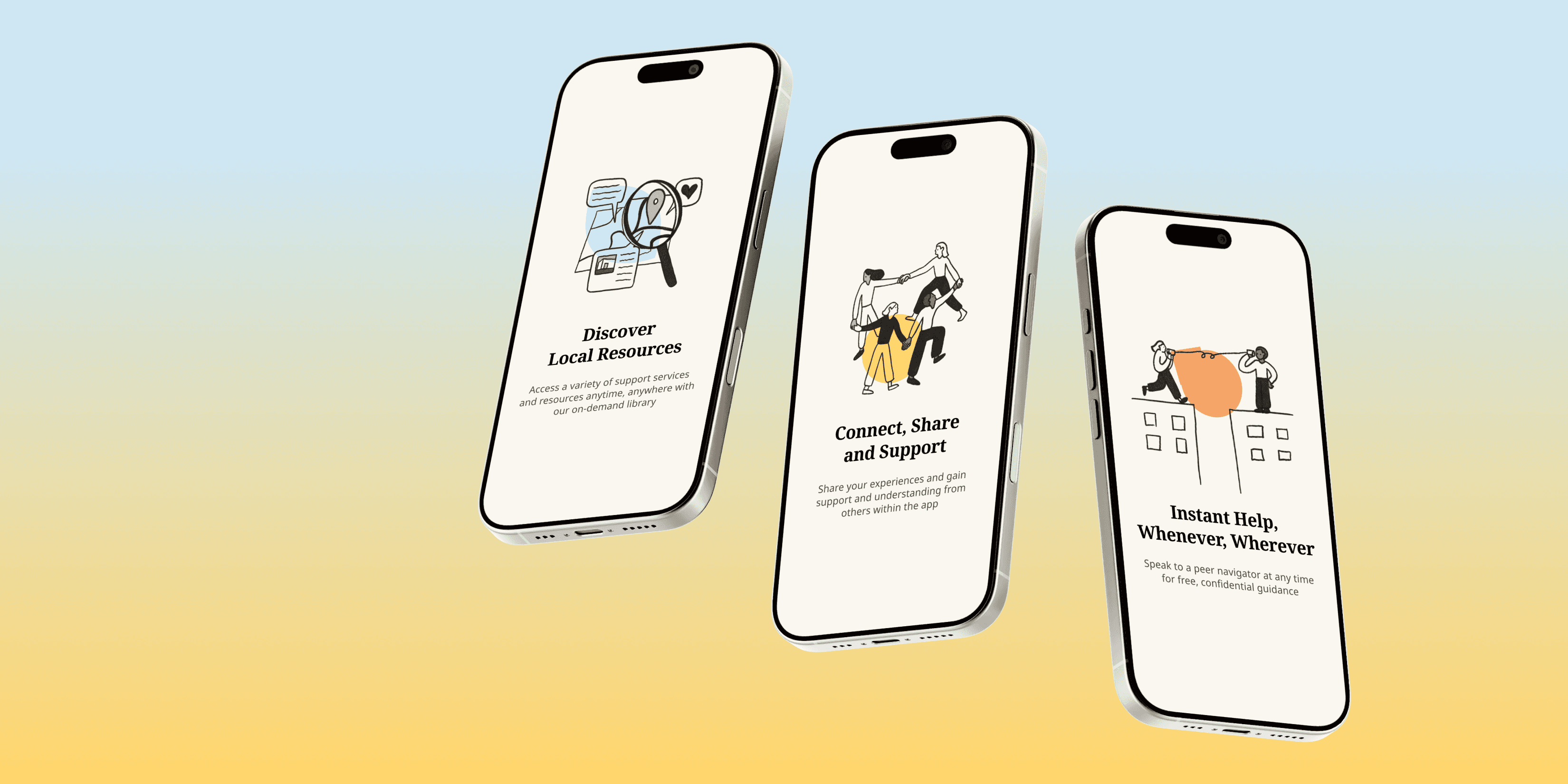
Talk: Immediate Support
An immediate support system providing one-on-one assistance when needed most.
Key Design Decisions
Integrated existing trusted helplines and navigation services to avoid burdening under-resourced services
Developed an automated emergency SMS system to alert trusted contacts
Talk: Immediate Support
An immediate support system providing one-on-one assistance when needed most.
Key Design Decisions
Integrated existing trusted helplines and navigation services to avoid burdening under-resourced services
Developed an automated emergency SMS system to alert trusted contacts
Talk: Immediate Support
An immediate support system providing one-on-one assistance when needed most.
Key Design Decisions
Integrated existing trusted helplines and navigation services to avoid burdening under-resourced services
Developed an automated emergency SMS system to alert trusted contacts
Branding & Design System
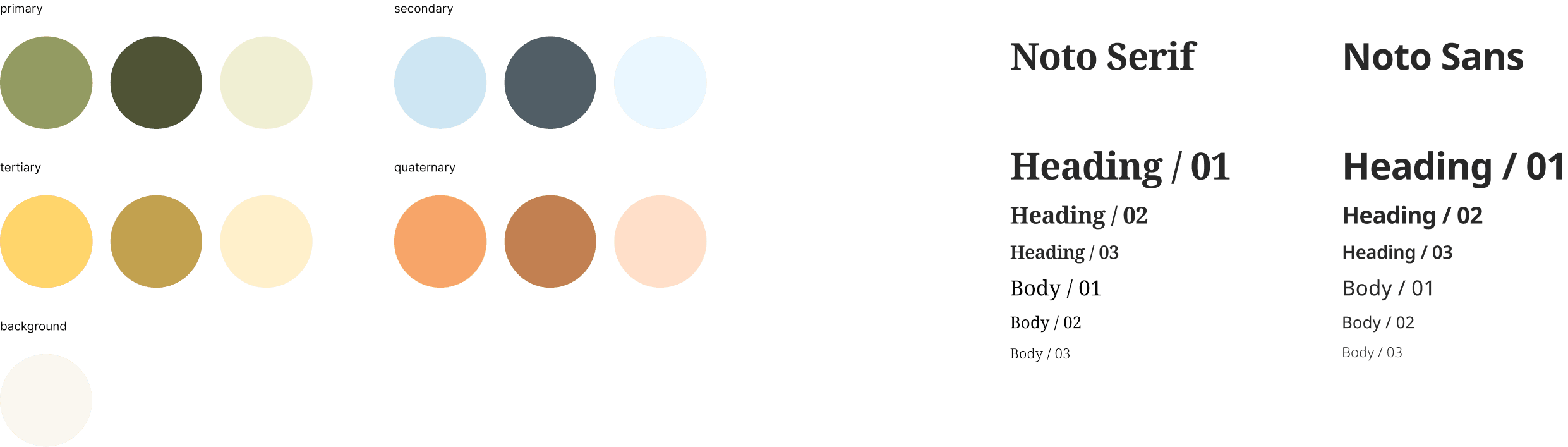
The name Season represents the cycles of change in a person's life and substance use journey. The visual identity uses warm, supportive tones and hand-drawn illustrations to create a welcoming atmosphere while reflecting the app’s core values of non-judgment and dignity.
Key Design Decision
We used branding to embrace harm reduction principles↗ through deliberately non-judgmental, non-coercive language. Our goal was to avoid pressuring users toward abstinence, instead creating an environment that respects autonomy and meets people where they are.
Key Design Decision
We used branding to embrace harm reduction principles↗ through deliberately non-judgmental, non-coercive language. Our goal was to avoid pressuring users toward abstinence, instead creating an environment that respects autonomy and meets people where they are.
Key Design Decision
We used branding to embrace harm reduction principles↗ through deliberately non-judgmental, non-coercive language. Our goal was to avoid pressuring users toward abstinence, instead creating an environment that respects autonomy and meets people where they are.

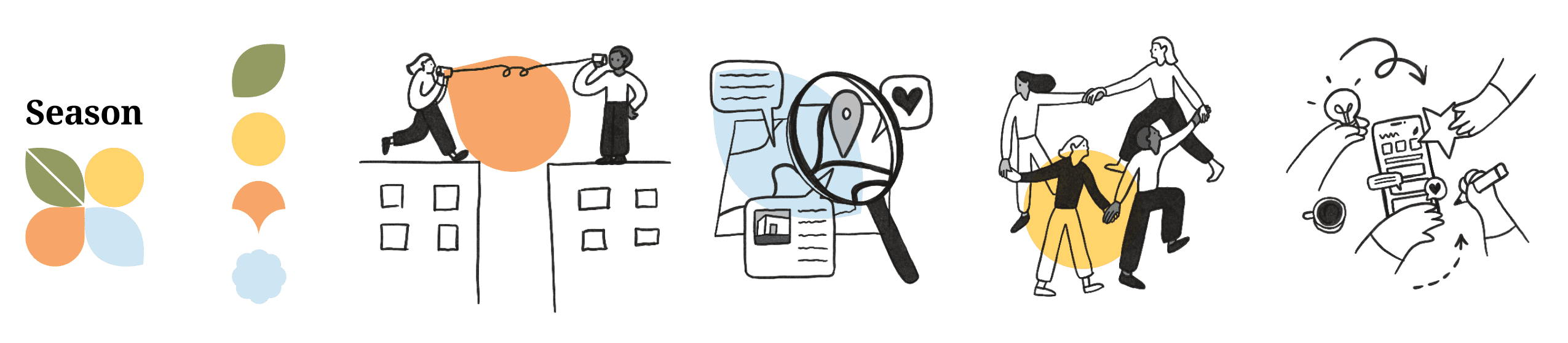
Color palette and typeface

Color palette and typeface

Color palette and typeface

Logo and hand-drawn illustrations

Logo and hand-drawn illustrations

Logo and hand-drawn illustrations

Reusable components

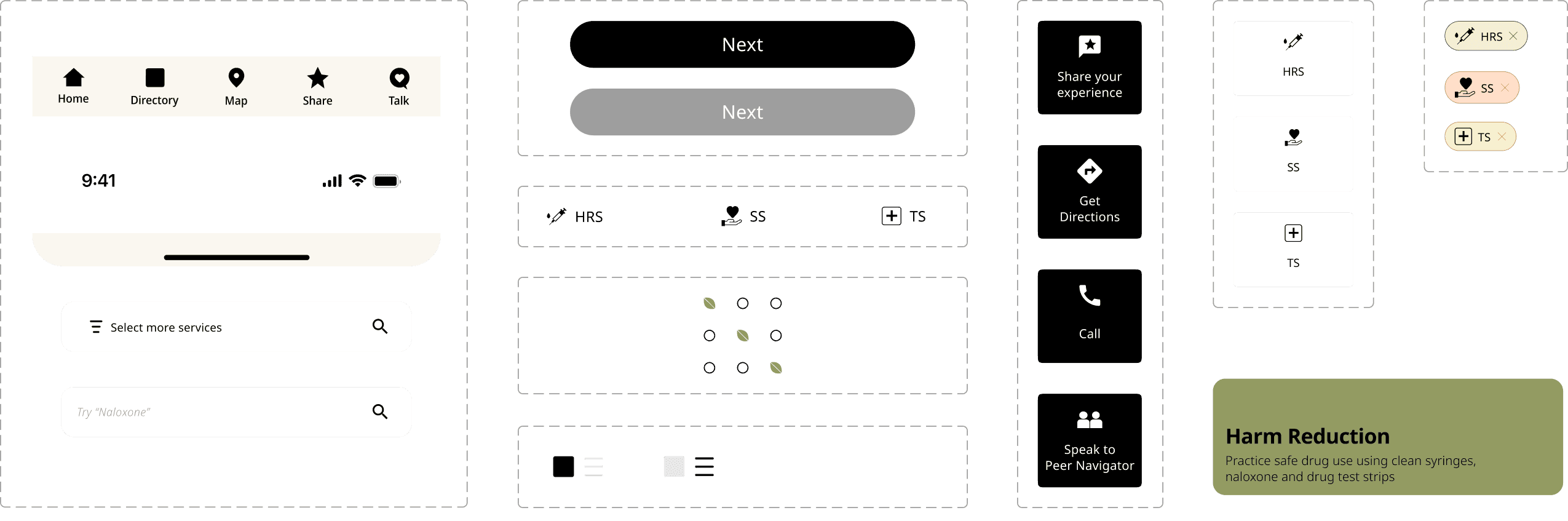
Reusable components

Reusable components
Reflections & Impact
The power of authentic co-design
Engaging directly with individuals with lived experience shaped every aspect of the app, enabling Season to resonate authentically with end-users and establish itself as a trusted resource.
The power of authentic co-design
Engaging directly with individuals with lived experience shaped every aspect of the app, enabling Season to resonate authentically with end-users and establish itself as a trusted resource.
The power of authentic co-design
Engaging directly with individuals with lived experience shaped every aspect of the app, enabling Season to resonate authentically with end-users and establish itself as a trusted resource.
More than just an app
In a marginalized space where people who use drugs often lack safe spaces, Season offers more than information—it provides a digital community where users can share knowledge, navigate the systems that have historically failed them, and find dignity in their journeys.
Season demonstrates how thoughtful UX design can address complex social challenges for communities systematically underserved by traditional systems.
More than just an app
In a marginalized space where people who use drugs often lack safe spaces, Season offers more than information—it provides a digital community where users can share knowledge, navigate the systems that have historically failed them, and find dignity in their journeys.
Season demonstrates how thoughtful UX design can address complex social challenges for communities systematically underserved by traditional systems.
More than just an app
In a marginalized space where people who use drugs often lack safe spaces, Season offers more than information—it provides a digital community where users can share knowledge, navigate the systems that have historically failed them, and find dignity in their journeys.
Season demonstrates how thoughtful UX design can address complex social challenges for communities systematically underserved by traditional systems.